










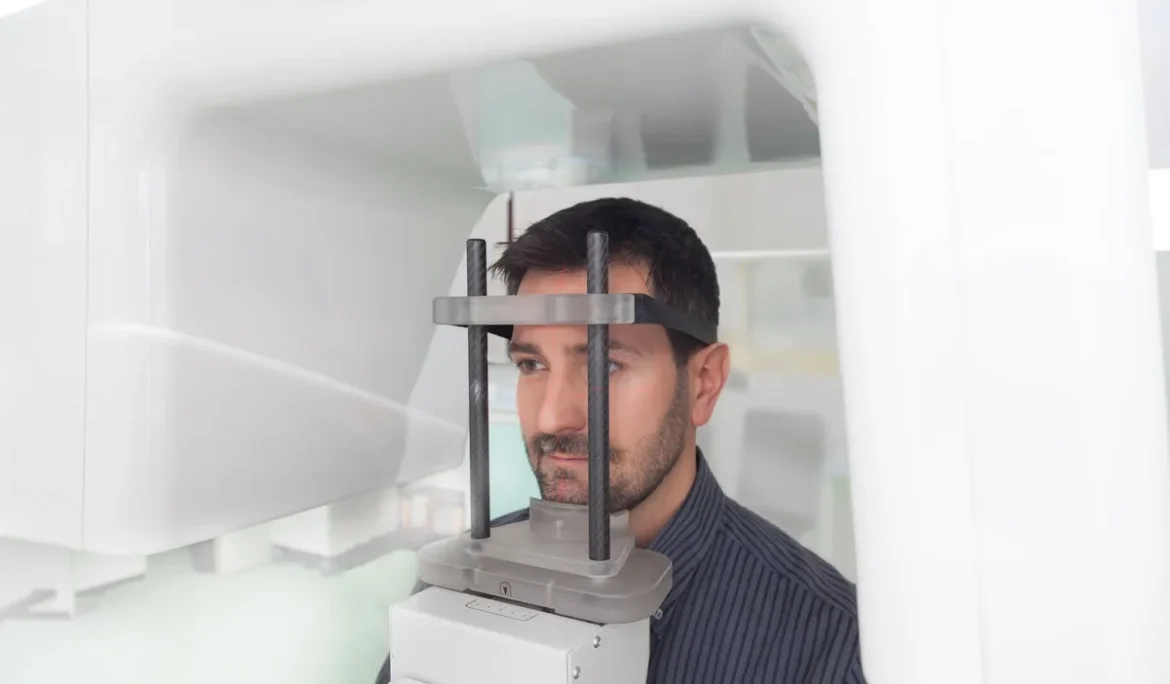
How CBCT Imaging Revolutionizes Endodontic Diagnosis and Treatment
When a tooth causes persistent pain or shows signs of infection, accurate diagnosis becomes essential for saving it. Traditional dental X-rays can miss critical details about root canal anatomy, hidden fractures, or the true extent of infection, which can lead to treatment complications or unnecessary procedures that could have been avoided with better imaging technology.
At Georgia Microendodontics, Dr. Jeannette Jimenez utilizes advanced Cone Beam Computed Tomography (CBCT) to provide patients with the most accurate diagnoses and treatment plans possible. This three-dimensional imaging technology allows us to detect problems that conventional radiographs simply cannot reveal, ensuring that every root canal therapy procedure is planned with precision and executed with confidence.
What Makes CBCT Different from Traditional X-Rays
Traditional two-dimensional dental X-rays compress three-dimensional anatomy into a flat image, which can cause structures to overlap and obscure important details. CBCT technology captures a complete 360-degree view of your tooth and surrounding structures in a single scan, creating a detailed three-dimensional image that can be viewed from any angle.
This comprehensive visualization allows endodontists to see exactly what’s happening inside your tooth, including canal configurations, fracture lines, and bone changes that would otherwise remain hidden. The ability to examine teeth from multiple perspectives eliminates the guesswork that often accompanies conventional radiographic interpretation.
Ways CBCT Imaging Has Transformed Endodontic Treatments
The integration of three-dimensional imaging into endodontic practice has fundamentally changed how specialists approach diagnosis and treatment planning. Modern CBCT technology provides endodontists with unprecedented visibility into the complex internal structures of teeth, allowing for more accurate assessments and more predictable treatment outcomes. These advancements have particularly impacted several key areas of endodontic care, from identifying hidden canals to detecting fractures that would otherwise go unnoticed.
Revealing Complex Root Canal Anatomy
One of the most significant advantages of CBCT imaging is its ability to identify complex root canal anatomy before treatment begins. Research demonstrates that CBCT technology enables the detection of additional canals that conventional radiographs miss in a substantial percentage of cases, particularly the commonly overlooked second mesio-buccal canal in upper molars.
At our practice, we use this technology to map out the complete canal system before beginning treatment, which dramatically reduces the risk of leaving infected tissue behind and improves long-term success rates. This thorough visualization ensures that no part of the infected tooth structure goes untreated.
Detecting Hidden Fractures and Resorption
Vertical root fractures and internal resorption can be nearly impossible to diagnose with standard X-rays because they often occur in the buccal-lingual plane, which isn’t captured in two-dimensional images. CBCT imaging allows us to identify these conditions with far greater accuracy by examining the tooth from multiple angles.
This capability is especially important because early detection of root resorption or fractures can mean the difference between saving a tooth and requiring extraction. The three-dimensional view reveals the full extent of any structural damage, enabling more informed treatment decisions.
Precise Treatment Planning for Complex Cases
When planning endodontic retreatment or apicoectomy surgery, CBCT provides invaluable information about the three-dimensional relationship between the tooth and surrounding anatomical structures. This includes the location of the maxillary sinus, nerve canals, and adjacent tooth roots.
With this detailed visualization, Dr. Jimenez can plan the most conservative surgical approach while avoiding potential complications. The technology also enables us to identify separated instruments, perforations, or other iatrogenic complications that require specialized management. This level of detail ensures that even the most challenging cases receive appropriate treatment planning.
Enhanced Accuracy with Lower Radiation
Modern CBCT imaging systems are designed with patient safety as a priority. When limited to small fields of view appropriate for endodontic diagnosis, CBCT scans deliver radiation doses comparable to a full mouth series of traditional X-rays while providing exponentially more diagnostic information. This approach ensures patients receive the lowest possible radiation exposure while maximizing the diagnostic benefit across various clinical applications. The focused scanning area focuses on the tooth of concern without unnecessarily exposing surrounding tissues.
Experience Precision Endodontic Care at Georgia Microendodontics
Dr. Jeannette Jimenez completed her endodontic specialty training at Columbia University, where she gained extensive experience with advanced diagnostic technologies. She understands that accurate diagnosis is the foundation of successful endodontic treatment, so our practice invests in the most sophisticated imaging systems available. This commitment to technology ensures that every patient receives a comprehensive evaluation before treatment begins, leading to more predictable outcomes and fewer surprises during procedures.
If you’re experiencing tooth pain or have been told you need endodontic treatment, contact our office to schedule a consultation where we can utilize our advanced diagnostic capabilities to develop the most effective treatment plan for your specific situation. Our Marietta practice combines cutting-edge CBCT imaging with years of clinical expertise to provide the highest standard of endodontic care.